Golf course irrigation systems that have been installed or upgraded at considerable cost during the past 30 years or so will be of littl
e use if there is no water available to pump through them.
Yet, there is a proven and cost-effective way of producing and maintaining good looking, high performing, low upkeep playing surfaces that requires no water, making them drought free, and is widely available to all golf courses.
Synthetic turf has made huge forward advances in recent years, moving very close to the real thing in terms of its appearance, its feel and the way that the surface reacts to the striking of a golf ball.
These advances have been achieved through the adoption of new materials, better manufacturing techniques and improved installation methods. A further element is the use of special sand-like fillers, such as Turfill®, to pack the spaces between the fibres producing a free-draining at depths of up to 2in (50mm). The result is a range of surfaces that deliver virtually all of the characteristics of natural turf, even down to creating backspin on the ball and fully inserting a tee peg.
Top players say that striking a golf ball directly from a professionally-installed synthetic tee feels little different from striking the ball off natural turf. The jarring associated with an unforgiving tee mat or the early rubber-backed surfaces is gone, absorbed by the combination of dense, grass-like synthetic fibres surrounded by a deep, sand-like filler.
One immediate benefit is that the surface does not suffer the costly damage experienced when players take a turf divot in wet or very dry conditions. Even better from the maintenance aspect is that synthetic turf requires no mowing, no aeration and no watering to maintain its colour, feel or appearance.
An ironic aspect of the synthetic turf surfaces, already in use at many golf clubs throughout the UK and Ireland, is that the majority were installed to alleviate the wear, tear and puddling of natural turf caused during periods of wetter weather by golfers feet and the movement of trolleys, golf buggies and turf maintenance equipment.
First used more than 10 years ago to create highly-acceptable full size winter tees, synthetic turf surfaces are now in widespread use across the UK. The latest materials can be specified in virtually any shape, size and fibre length (filled and unfilled) to provide an economical, low maintenance, highly realistic alternative to grass, that is totally unaffected by drought.
In doing so, all-weather surfaces are able to complement fine turf both as an alternative playing surface and as an aid to recovery following adverse weather and high wear.
For those who have yet to consider or install an all-weather golf surface, following is a list of potential applications with installation and maintenance requirements.
Golf course tees and practice tees
Available in a variety of fibre lengths for use with and without filler, the best synthetic golf course tees and golf practice tees need to be professionally installed on a properly-constructed base that allows free drainage and will remain level and true for years to come.
Filled surfaces are ideal as an alternative to a natural golf course tee because the all-weather synthetic turf looks and performs just like natural grass. The depth of filler means that golfers can play off a standard tee peg or hit the ball directly from the surface.
Professional and low handicap golfers are impressed that they are able to "work the ball in exactly the same way that they can off top quality natural turf.
Being very similar in playing quality to a normal grass tee, it is most important that an all-weather filled surface is kept free of soil and mud to avoid clogging, compaction and poor drainage. The filler will also need topping-up as it settles down and is displaced by spiked shoes, the action of a metal or wooden club and rain water. An annual birthday is highly recommended to keep the surface in prime playing condition.
An alternative for high wear practice tees and other locations where regular maintenance is difficult or uneconomical is to use a surface without the addition of filler. Also installed on a properly prepared base, the latest nylon materials offer a rewarding and durable tee surface that provides excellent ball-striking characteristics with minimal maintenance.
Many golf clubs and teaching academies such as the National Golf Centre at Woodhall Spa have installed large all-weather unfilled practice tees, typically around 25 yards (23m) in length, to improve standards and help speed the recovery of natural grass.
Pathways, cartways, standing areas and lawns
Utilising much shorter fibres than those employed in the construction of all-weather tees, the material used for pathways and similar high-wear areas offers a very durable surface that is both attractive to look at and safe and silent to walk on.
Installed onto a properly prepared base to promote good drainage and long-term stability, such surfaces are in use already at many high throughput golf courses helping to combat turf wear and soil erosion in areas of concentrated foot fall such as waiting and standing zones alongside tees, dedicated pathways between tees and greens, and on bridges and their approaches.
Carnoustie Links, for example, has made extensive use of synthetic turf to minimise wear on pathways and bridges crossing burns.
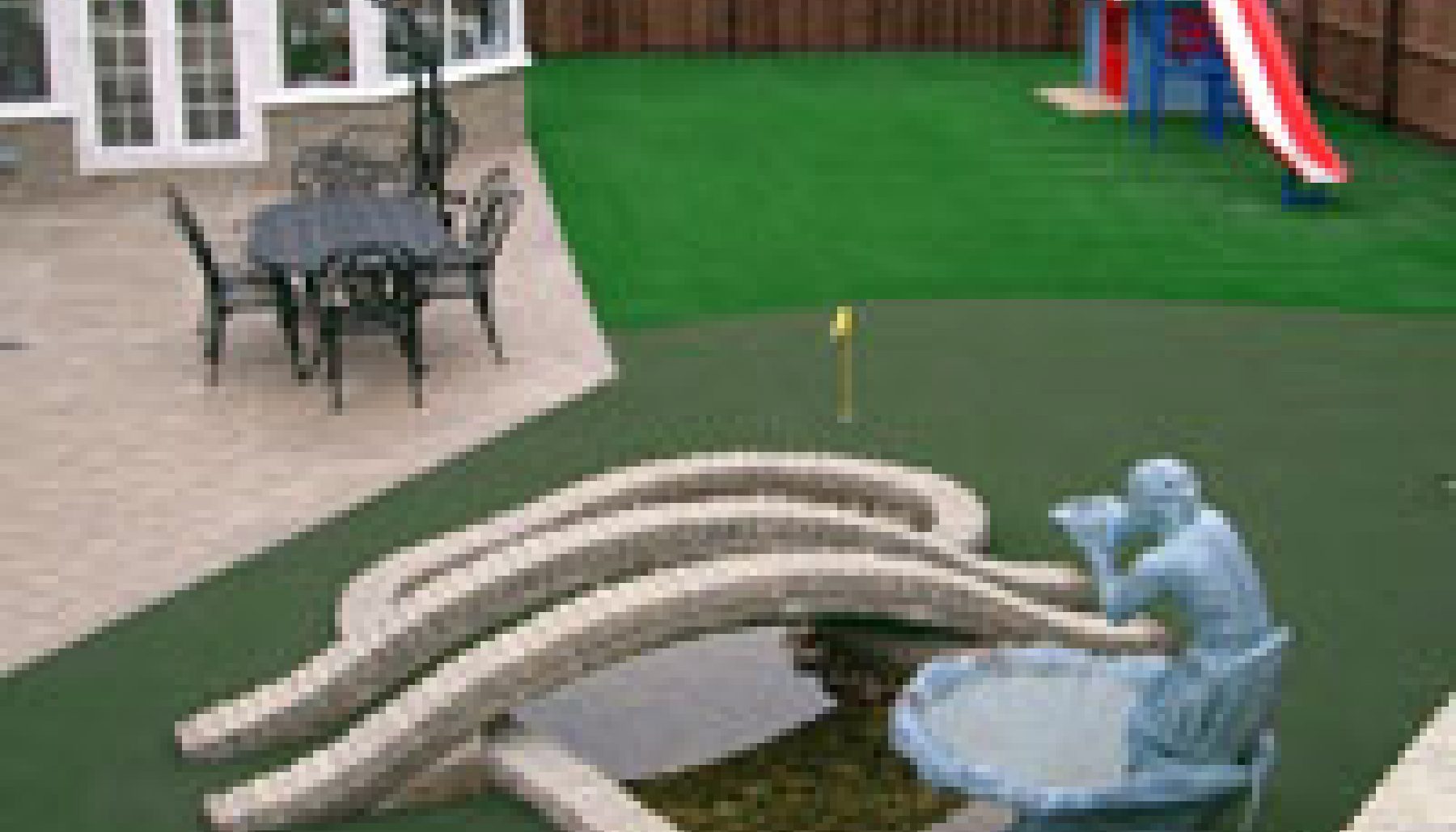
Normally filled to provide a resilient and attractive surface that looks just like natural grass, all-weather pathway turf - as it is commonly known - can be used also for patios, pro-shop approaches and as a highly realistic, prestige and low maintenance replacement for lawns and verges.
Putting and chipping greens
With hand watering still practised on a number of natural grass putting and chipping practice greens, the installation of a full-size synthetic replacement could be good news for many hard-pressed greenkeepers charged with producing the best possible putting surface on all greens in times of drought (and also monsoon!).
The latest crush-resistant, filled nylon turf putting surfaces look, play and feel remarkably like the real thing, offering a tournament quality finish and a true roll of the ball. The addition of a filler means that the surface also has excellent shot-holding characteristics for those wanting to practise their short game.
All-weather practice greens are now in use at many golf clubs providing members with the same high quality all-weather practice surfaces used by a number of leading European Tour professionals at their homes.
At the golf club or at home, an all-weather putting green will require minimal maintenance and no applications of water to remain good looking, consistent and true throughout the year.
Golf greens
Perhaps the most controversial use of synthetic turf is as a replacement for a natural grass golf green. However, this application is not new and there are many golf clubs in the USA and a number on this side of the Atlantic that have adopted synthetic materials for the overall benefit of the golf course, its members and visitors.
The principle advantages are low maintenance and no requirement for water with the ability to produce a true and consistent playing surface all year round. These plus points make such greens very suitable for commercial pay and play courses and for academies, schools and hotels where the number of qualified greenkeeping staff is low or non-existent.
Laid on a stable, free-draining base, the materials used in the construction of an all-weather golf green are very similar to those employed for synthetic putting and chipping greens with filler helping provide an acceptable putting surface with good shot-holding capabilities.
Indoor putting greens
Ideal as a replacement for a high maintenance, water-demanding natural grass putting green, indoor putting greens are being used increasingly for coaching, for practice and for putter assessment and development.
Permanently installed on a timber or solid base - the latter with the option of undulations - or in the form of a quickly-assembled modular putting green, the latest filled nylon surfaces offer a true ball roll, excellent speed and a highly realistic appearance. As a bonus, they can be produced in shapes and sizes to fit just about any space.